
Ecophysiology of Woodland Salamanders
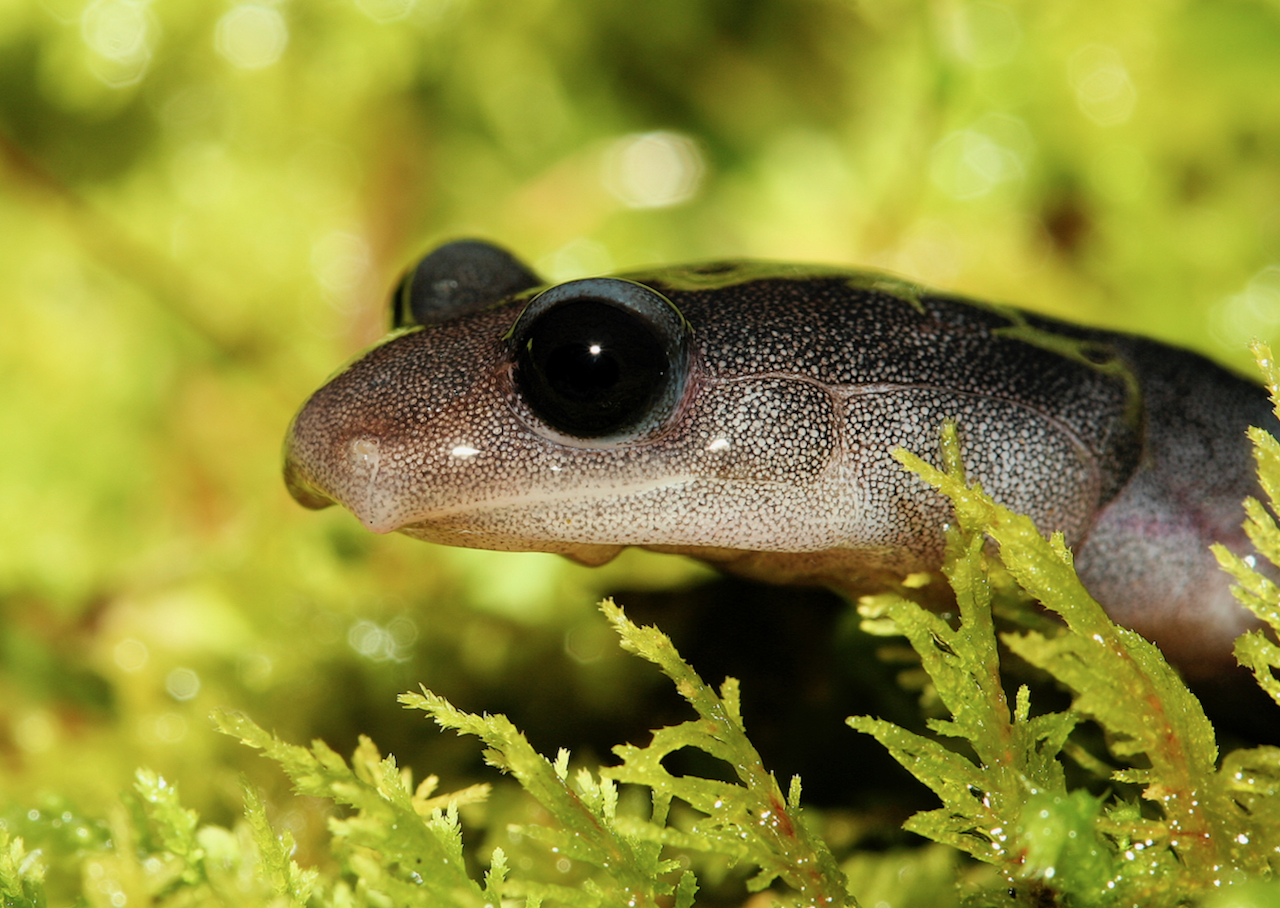
Ecophysiology of Woodland Salamanders
Linking metabolism, water balance, dormancy, and tissue regeneration.
Woodland salamanders are one of the most unique and ecologically important vertebrates in North America. We study how physiology links environment to fitness and how those links shape vulnerability, range limits, and evolutionary trajectories.

Physiology and climate vulnerability
We quantify how metabolic rate and water loss interact to shape organismal performance across thermal and hydric gradients. Because salamanders rely heavily on cutaneous respiration, changes in skin resistance directly influence oxygen uptake, activity capacity, and dehydration risk.
- Metabolic rate: energy demand under variable temperature
- Water loss: evaporative constraint on activity and survival
- Integration: linking physiology to performance and climate exposure
Connect physiological traits to fitness-relevant outcomes to improve predictions of climate vulnerability across species and landscapes.
Winter dormancy, energetics, and species ranges
Winter is a dominant selective force for temperate salamanders. We investigate how metabolic regulation, tissue structure, and energy storage strategies during dormancy influence survival, overwinter performance, and geographic range limits.
- Metabolic physiology: rates during dormancy and warming
- Histology: tissue organization and structural changes
- Energetics: stored fuels and seasonal constraints
How do winter metabolic constraints set the boundaries of where species can persist?
Ecology and evolution of tissue regeneration
Salamanders are renowned for their regenerative capacity, yet rates of regeneration vary across environments. We examine how metabolic rate, elevation, and energy availability shape regeneration rates and mechanisms.
- Tail-tip regeneration: standardized assays across populations
- Metabolic links: energetic costs of tissue rebuilding
- Evolutionary gradients: regeneration across elevation and climate
We are quantifying tail-tip regeneration rates to test how energy availability shapes regenerative investment.